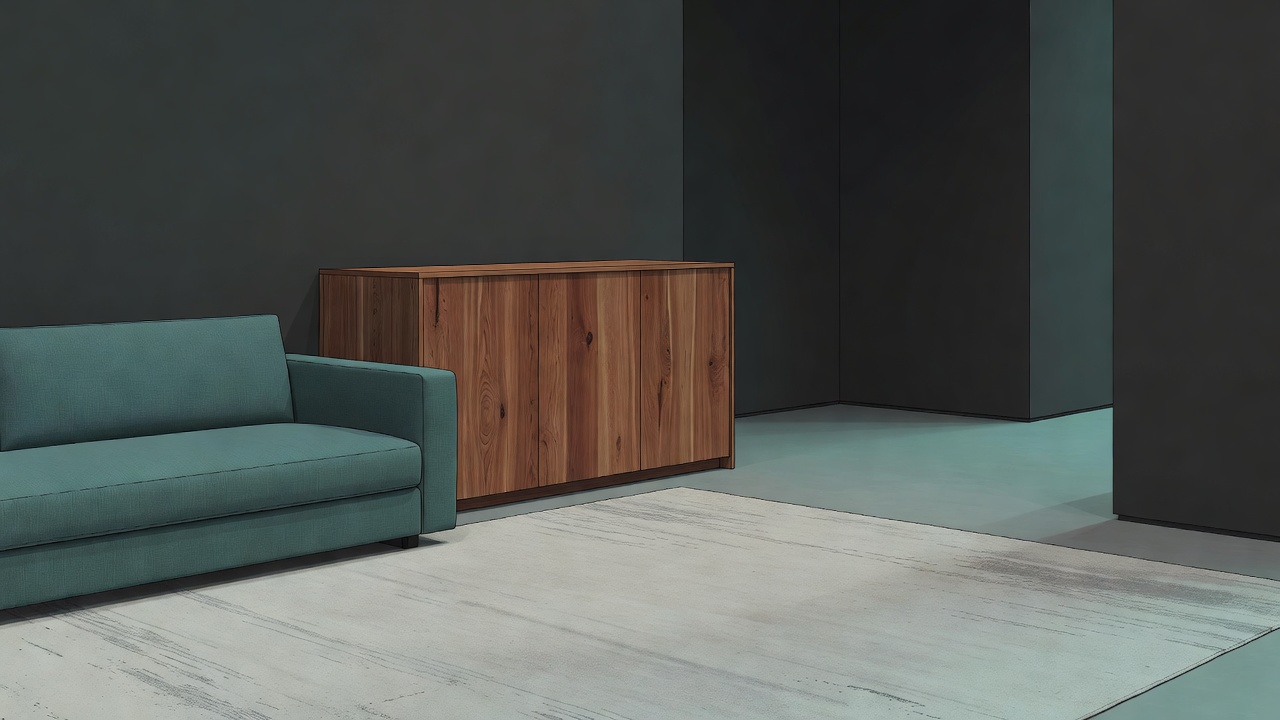
Read the room before adding material
A warm interior begins with what is already fixed. Flooring, doors, skirting, window frames and large upholstered pieces form a palette before any cedar arrives. List those elements and decide which will remain. A new cabinet should relate to that existing setting, not to an isolated photograph of an ideal room with different light and proportions.
Observe the room at several times of day. Light can exaggerate red tones, flatten grain or make a dark corner feel heavier than expected. Notice reflected color from nearby walls and textiles as well. A wood sample placed flat on a table may look different when held upright where a cabinet front will sit. Test materials in the orientation and location you intend to use.
Choose a clear material anchor
Decide where cedar will have the strongest presence. In a living room it might be a low sideboard; in a hallway, a useful bench; in a bedroom, a modest chest. That single anchor establishes a point of warmth. Other elements can support it through proportion or color without repeating the same wood on every wall and surface.
If the room already contains a pronounced timber floor, another large grain pattern needs careful consideration. A painted cabinet with a cedar detail may work better than an entirely wooden piece. Conversely, a room dominated by plain plaster and upholstery may welcome a larger grain surface. There is no universal quantity of timber that makes a room natural.
Compare palettes as relationships
The combinations below are prompts for sampling, not fixed recipes. Cedar itself can range from pale and quiet to dark, reddish and highly varied. Put the real materials together and adjust the balance before making a large purchase.
Light and grounded
Cedar, oatmeal linen and chalk. Use the wood as the warmer focus, with plain fabric and generous quiet wall space.
Deep and restrained
Cedar, muted olive and charcoal. Check that daylight and task lighting keep useful edges and pathways easy to read.
Earth with contrast
Cedar, clay and pale mineral tones. If the wood is strongly red, reduce the clay area so the warm notes do not merge.
Protect circulation and everyday tasks
A visually convincing room must still work. Mark the footprint of furniture before buying, including doors and drawers in their open positions. Consider routes taken while carrying bags, moving a vacuum or helping another person through the room. Leave access to sockets, ventilation grilles and heating equipment according to applicable instructions.
Do not place wood furniture where it faces persistent dampness or direct heat simply because it looks attractive there. Bathrooms, radiator edges and sunny windows can create demanding conditions. Suitability depends on the specific piece, finish and environment. Where built-in work affects services, fire safety or the building fabric, use qualified advice and follow local requirements.
Let lighting reveal rather than flatten
Broad ambient light helps establish the room, while a reading lamp or carefully placed accent can reveal the texture of a single surface. Light grazing across wood may emphasize ridges and small imperfections; that can be desirable on a tactile wall but distracting on an uneven repair. Test positioning before committing to fixed lighting.
Judge lamp color with the actual materials rather than assuming one color temperature always makes cedar look better. Different light sources can render the same finish differently. Avoid relying on a strong pool of warm light to compensate for an unresolved palette. The relationships should remain coherent in ordinary daylight too.
Edit with use and durability in mind
Natural living is not a requirement to replace serviceable possessions with new natural-looking products. Keeping a useful table, repairing upholstery or buying an appropriate secondhand piece can be a sensible starting point. Claims about environmental benefit require context, including sourcing, transport, longevity, maintenance and eventual disposal. A material name alone does not establish the impact of a finished item.
After arranging the room, remove anything that exists only to repeat the theme. A stack of decorative logs or several matching baskets may add less than one well-used seat and a clear surface. Give the room time to be lived in, then adjust the elements that obstruct movement, gather clutter or prove difficult to maintain.
The result should not read as a timber showroom. It should feel like a room with clear decisions: cedar where its grain contributes, softer materials where comfort is needed, and enough unoccupied space for daily life.