Start with the work, not the silhouette
Before choosing a cedar piece, describe an ordinary day around it. An entry bench supports people, catches bags and may encounter damp clothing. A bedroom shelf holds lighter objects and receives less abrasion. A coffee table faces cups, crumbs and repeated wiping. Those are different material problems, even when the pieces share the same warm color.
Many woods sold as cedar are relatively soft compared with common furniture hardwoods. That does not make them unusable, but it changes what successful use looks like. A low-traffic cabinet may develop a gentle patina; a heavily used worktop can acquire dents much sooner than expected. A protective coating can help with some surface exposures, but it does not turn soft wood into a hard substrate.
Know which cedar you are buying
Western redcedar, Thuja plicata, is associated with the Pacific Northwest and coastal British Columbia. Aromatic eastern redcedar, Juniperus virginiana, is a different species with a different appearance. True cedars belong to Cedrus; cedar of Lebanon, Cedrus libani, illustrates why a shared common name should not be treated as a technical specification.
Ask a seller to identify the species and explain whether the piece is solid wood, veneer, or a mixed construction. Veneer is not automatically inferior: well-made veneered panels can provide broad, visually calm surfaces. What matters is knowing where solid edges, panel substrates and coatings occur, so that expectations for repair and wear are realistic.
Read the structure beneath the surface
Look under the furniture. Check how legs connect, how a wide top is attached, and whether a long shelf has support against sagging. Solid wood changes dimension as moisture conditions change. Competent construction accommodates that movement rather than attempting to lock every broad board rigidly in place. A visible knot can be attractive, but its position matters if it interrupts a narrow, highly stressed component.
Test stability on a level floor, ask about rated use, and do not confuse a decorative ledge with a seat. Tall storage may need wall anchoring according to its manufacturer’s instructions and the wall construction. If you are buying an antique chest, inspect its hardware and lid behavior; do not assume an old closing mechanism is suitable around children. Structural and child-safety questions deserve specific answers, not a reassuring description of the timber.
A useful viewing checklist
- Confirm species, dimensions and solid or veneered construction.
- Look at joints, undersides, backing panels and shelf supports.
- Ask how the finish handles water, cleaning and repair.
- Check access routes, wall clearances and anchoring requirements.
Choose one material anchor
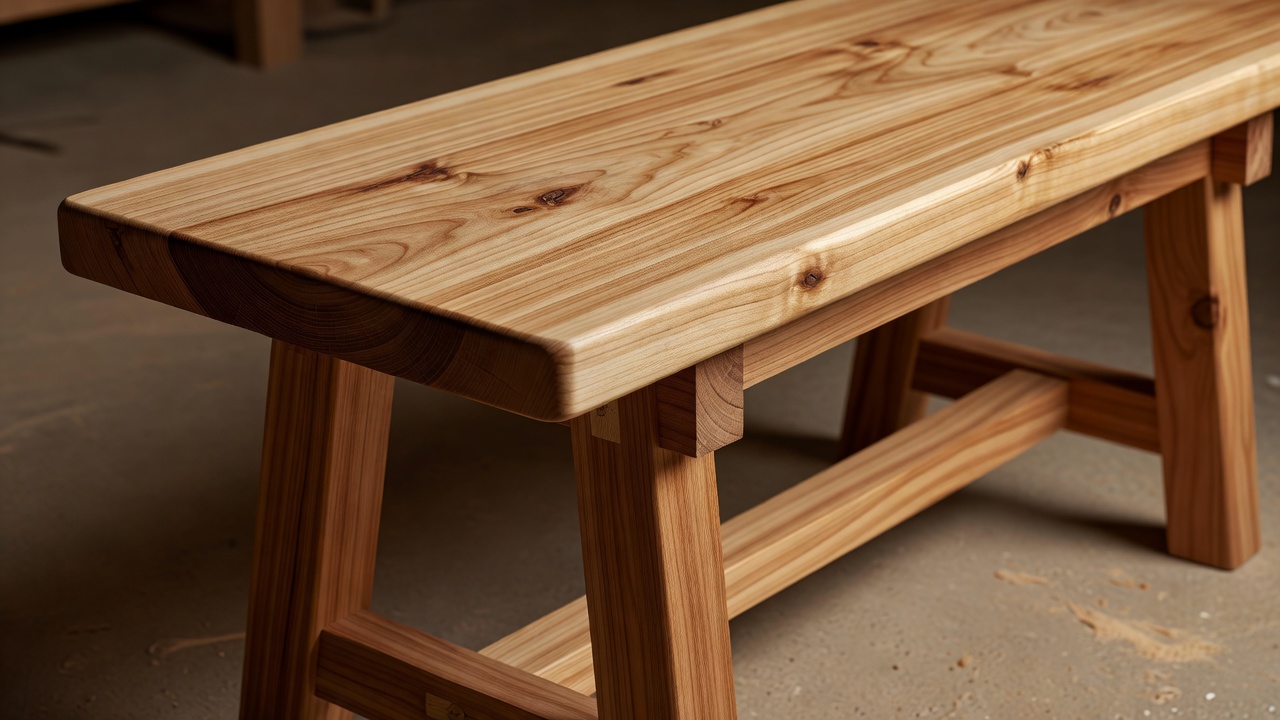
A cedar bench can be enough to establish a room’s timber character. Place it against a quieter wall, then judge whether another wood element is actually needed. Repeating the same grain in shelving, wall panels and side tables can flatten the contrast that made the first piece appealing. Different woods can coexist, particularly when one is visually dominant and the others have simpler grain or smaller areas.
Proportion matters as much as color. A thin, long shelf reads differently from a deep block-like cabinet. In a narrow hallway, open space under a bench may help the floor remain visually continuous. In a large room, a more substantial cabinet can provide a useful anchor without requiring matching furniture everywhere else.
Plan for maintenance and provenance
Ask for written care instructions before purchasing. Use pads beneath abrasive objects, deal with spills promptly, and follow the finish maker’s cleaner recommendations. Do not add polish, oil or wax simply because the wood looks dry; an existing coating may not accept it. For used furniture, establish what was previously applied before planning a repair.
Where sourcing is important, request documentation rather than relying on “sustainable” as a general adjective. The Forest Stewardship Council and Programme for the Endorsement of Forest Certification offer certification systems; a claim still needs to relate to the actual product and supply chain. Reclaimed timber also needs a history: old coatings, hidden fasteners and unknown treatments can complicate indoor reuse.
The most convincing cedar furniture is not necessarily the most rustic or the most expensive. It is a piece whose species, build and finish fit the task, and whose presence improves the room without demanding that everything around it become timber.